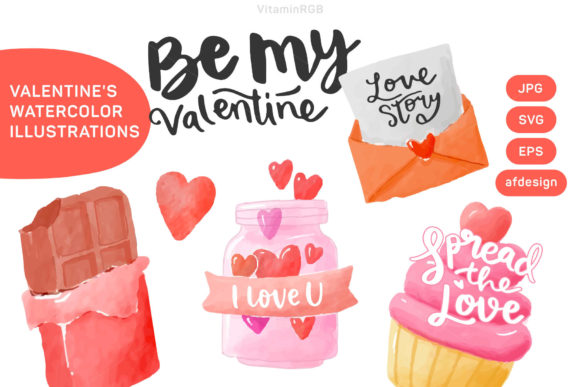
Valentines Watercolor Illustrations: Your Creative Toolkit
When a project calls for a touch of romance, warmth, and artistic flair, generic clip art often falls short. You need assets that carry emotion, texture, and a sense of handmade authenticity. This is precisely where high-quality Valentines Watercolor Illustrations become an indispensable resource for designers, entrepreneurs, and creators. These aren't just simple graphics; they are versatile design assets built to elevate your work, whether you're crafting a heartfelt greeting card, designing a sophisticated brand identity, or launching a targeted marketing campaign.
The true value of this collection lies in its professional-grade composition and the flexibility it offers. Each illustration is carefully crafted to capture the fluid, organic beauty of watercolor paint, featuring soft blends, subtle texture, and a rich, emotive color palette. The style balances modern elegance with timeless charm, making it suitable for both contemporary digital designs and classic print applications. This isn't about flashy effects; it's about providing a toolkit that enhances your visual storytelling and connects with your audience on an emotional level.
The Anatomy of a Versatile Design Asset
Understanding the components of a premium illustration pack is key to using it effectively. A well-structured collection provides multiple file formats, each serving a distinct purpose in your workflow. This particular set of Valentines Watercolor Illustrations is designed for seamless integration into professional projects, offering a complete suite of tools.
- SVG Vector File: The cornerstone of scalability. SVG files are perfect for web design, ensuring your illustrations remain crisp and clear on any screen, from mobile phones to high-resolution displays. They are also ideal for applications requiring clean, scalable graphics like logo design elements or animated web assets.
- EPS Vector File: The industry standard for print and professional design software. EPS files maintain their quality at any size, making them essential for large-format printing such as posters, banners, and merchandise. They are fully editable in programs like Adobe Illustrator, giving you complete control over color and form.
- PNG Transparent: The most versatile format for layering and composition. With the background removed, these PNGs can be easily dropped onto any colored background, photo, or texture. They are perfect for social media graphics, blog post headers, and quick mockups where you need to integrate an illustration without complex masking.
- afdesign Affinity Designer File: A native file for users of Affinity Designer, a powerful and popular alternative to Adobe's suite. This allows for direct, non-destructive editing within the software, preserving all layers and effects for maximum creative control.
This multi-format approach ensures that whether you are a web developer, a print designer, or a content creator using Canva, you have the right tool for the job. It’s about providing practical, real-world solutions, not just pretty pictures.
Practical Applications: From Brand Identity to Personal Projects
The appeal of watercolor is its inherent humanity. It feels personal, artistic, and less sterile than perfect digital gradients. Integrating Valentines Watercolor Illustrations into your work can profoundly influence how your project is perceived. The style evokes feelings of care, creativity, and sincerity, which can strengthen brand perception and audience engagement.
Consider how these assets can be applied across different domains:
- Branding and Marketing: For small businesses, especially in the boutique, artisanal, or wellness spaces, these illustrations can become a core part of a brand identity. Use them on packaging design to add a premium, handcrafted feel. Incorporate them into social media graphics to create a cohesive and inviting visual feed. They are excellent for creating patterns for branded stationery or subtle website backgrounds that add depth without overwhelming content.
- Publishing and Editorial Design: In editorial design for magazines, blogs, or book covers, a well-placed watercolor element can guide the reader's eye and set the tone. They work beautifully as chapter headers, decorative dividers, or spot illustrations that break up text and add visual interest. Their organic nature complements both serif fonts for a classic look and clean sans serif fonts for modern contrast.
- Digital and Web Design: Beyond static images, these illustrations can be used to create engaging web elements. Think custom cursors, loading animations, or interactive hover states. In a digital landscape dominated by sharp vectors and photography, the soft texture of watercolor can make a website feel more approachable and memorable.
- Personal and Craft Projects: For hobbyists and crafters, the possibilities are endless. Design unique Valentine's Day cards, create custom wall art, embellish scrapbooks, or print them onto fabric for special gifts. The included PNG files make them incredibly easy to use with home printers and cutting machines like Cricut or Silhouette.
Integrating Illustrations into Your Design Workflow
Simply having beautiful assets isn't enough; knowing how to use them effectively is what separates good design from great design. When working with Valentines Watercolor Illustrations, a thoughtful approach to composition and pairing is essential.
Testing Font Pairings: The personality of the watercolor style should inform your typography choices. For a romantic, elegant project, pairing the illustrations with a graceful script font or a refined serif font can create a harmonious aesthetic. For a more modern, playful vibe, contrast the organic textures with a bold, geometric sans serif font. The key is to let the illustrations and typography complement each other, not compete. Avoid using overly decorative handwritten fonts that might clash with the illustration's own artistic style.
Establishing Visual Hierarchy: Use the illustrations to support your message, not overshadow it. A large, bold illustration can serve as a focal point, while smaller, more subtle elements can be used as accents or background textures. In logo design, a watercolor element might be used as a secondary mark or a background splash behind the primary typeface, adding character without sacrificing legibility.
Color Consistency and Branding: While the illustrations come in a predefined color palette, the vector formats (SVG and EPS) allow you to easily adjust the colors to match your specific brand guidelines. This is crucial for maintaining a consistent brand identity across all touchpoints. Use the eyedropper tool in your design software to pull colors directly from your brand palette and apply them to the illustrations for a seamless integration.
Ultimately, a collection like this is an investment in your creative toolkit. It provides a foundation of high-quality, versatile assets that can be adapted to countless projects, saving you time and elevating the professionalism of your work. By understanding the strengths of each file format and thoughtfully applying the illustrations, you can create designs that are not only visually stunning but also emotionally resonant and strategically effective.
Please, let me know if you have any questions!