Dry Ink Vegetables Illustrations: Elevate Your Creative Projects
There's a certain magic in artwork that feels both organic and intentionally crafted. The Dry Ink Vegetables Illustrations collection captures this perfectly, offering a suite of assets that blend natural subject matter with a distinct, textured artistic style. This isn't just a set of images; it's a toolkit for adding personality, warmth, and a handcrafted quality to a wide array of projects. For designers, marketers, and creators, understanding how to leverage such assets is key to standing out.
The Visual Character: More Than Just Pictures
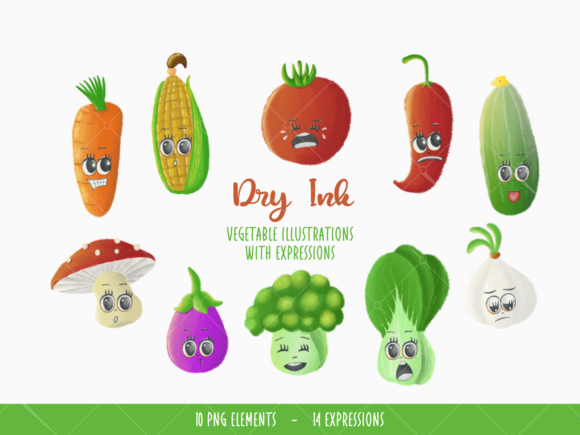
At its core, the appeal of these illustrations lies in their visual texture and style. The "dry ink" technique suggests a sense of immediacy and artistry—you can almost see the brush strokes and the way the ink interacts with the paper. This style imparts a rustic, organic, and slightly imperfect charm that digital vectors often lack. The vegetables themselves are rendered with a keen eye for natural form, yet possess a stylized quality that makes them versatile design elements rather than mere botanical diagrams.
The collection provides 10 vegetable PNGs, each on a transparent background at 300 dpi in RGB color mode. This technical specification is crucial for professional use. The high resolution ensures crispness in both print and digital formats, while the transparent background allows for seamless integration into any layout, color scheme, or existing design. Furthermore, the inclusion of 14 PNG facial expressions adds a layer of playful versatility, enabling creators to anthropomorphize the vegetables for branding, storytelling, or engaging social media content.
Practical Applications Across Industries
The true value of any design asset is measured by its utility. The Dry Ink Vegetables Illustrations excel in numerous contexts, serving professionals and hobbyists alike. For packaging design, they can instantly communicate a brand's commitment to natural ingredients, artisanal quality, or farm-to-table freshness. Imagine these illustrations gracing the labels of a local jam, a boutique tea company, or a gourmet sauce—they tell a story before the product is even opened.
In the realm of editorial design and publishing, these illustrations bring articles, blog posts, and magazines to life. A food blogger can use them to decorate recipe headers, while a wellness publication can employ them to visually anchor features on nutrition or sustainable living. For social media graphics, the expressive faces offer a quick way to create relatable, humorous, or instructional content that drives engagement. Entrepreneurs and small business owners will find them invaluable for creating cohesive brand identity materials, from website banners and email newsletters to printed flyers and business cards.
Integrating Texture into Your Design Workflow
Introducing textured illustrations like these requires thoughtful implementation to maintain professionalism and readability. They work exceptionally well as accent elements rather than overwhelming backgrounds. Use a single, bold vegetable illustration as a focal point in a poster or as a hero image on a landing page. Scale them down and repeat them as subtle patterns for packaging sleeves or social media story backgrounds.
When it comes to font pairing, the organic nature of the illustrations pairs beautifully with typefaces that complement rather than compete. A clean sans serif font can provide a modern counterpoint, letting the illustration's texture shine. Alternatively, a serif font with classic proportions can enhance the timeless, artisanal feel. For projects aiming for a particularly whimsical or personal touch, a script font or a subtle handwritten font can create a cohesive, handcrafted aesthetic. The key is to test combinations, ensuring the text remains legible and the visual hierarchy is clear.
Choosing and Using These Assets Effectively
Before incorporating the Dry Ink Vegetables Illustrations into a commercial project, a practical evaluation is wise. Consider the project's tone. Is it playful, sophisticated, rustic, or modern? The style of these illustrations leans toward the natural and artistic, making them a perfect fit for brands and projects aligned with health, food, sustainability, creativity, and handmade goods. They might be less suitable for ultra-corporate or highly technical contexts where photorealism or sterile vector graphics are expected.
Always review the full set of included files. The 10 vegetable PNGs and 14 facial expressions offer a specific palette. Do the available vegetables and expressions align with your project's narrative? For a campaign focused on "happy, healthy eating," the expressive faces are a major asset. For a more subdued, elegant packaging design, you might primarily use the vegetable silhouettes alone.
Finally, adhere to the licensing terms provided. Understanding whether the license covers personal use, commercial projects, or specific print runs is essential for professional and legal compliance. By treating these illustrations as a premium font or a creative font package—valuable assets that require proper integration—you can unlock their full potential to enhance visual storytelling, strengthen brand perception, and create memorable, engaging content that resonates with your audience.